What Are Tanning Accelerators?
Tanning accelerators are beauty products marketed as a way to help skin develop a tanned appearance more quickly when it is exposed to ultraviolet light, whether from the sun or from a sunbed. They are usually sold as lotions, creams, oils or sprays that are applied to the skin before tanning, and they sit in a different category from self-tan products. A self-tan product colours the surface of the skin without any need for ultraviolet exposure, whereas a tanning accelerator is designed to be used alongside ultraviolet exposure, which is an important distinction for safety. Understanding that difference is the first step to using these products with realistic expectations, because an accelerator does not create a tan on its own and it certainly does not make ultraviolet exposure safe.
The basic idea behind tanning accelerators is straightforward, even if the marketing around them can be confusing. Human skin darkens in response to ultraviolet light as melanin, the pigment that gives skin its colour, is produced and distributed in the skin. Tanning accelerator products typically claim to support that natural process, often by moisturising the skin and by including ingredients that are presented as melanin precursors or skin-conditioning agents. Well-moisturised skin can look smoother and more even, and a tan can appear more uniform on skin that is cared for, which may partly explain why some people feel that an accelerator has improved their result. It is important to be clear, however, that no lotion changes the fundamental way ultraviolet light affects skin, and no accelerator removes the risks that come with that exposure.
Tanning accelerators are also sometimes confused with bronzers, and the two are not quite the same thing. A bronzer adds immediate colour to the skin, often through tinted pigments that wash off, while an accelerator is presented as a product that works with ultraviolet exposure over time. Some products combine both ideas, offering an instant tint as well as an accelerator formula, so reading the label carefully matters. If a product gives instant colour, that colour is not proof that a lasting tan is developing underneath, and it should not be used as a reason to stay in the sun or on a sunbed for longer than you otherwise would.

How Tanning Accelerators Are Marketed
Walk through any beauty aisle or browse tanning products online and you will quickly see a familiar set of marketing promises. Tanning accelerators are often described with words such as fast, deep, dark, intense and rapid, and packaging may suggest that a richer colour can be achieved in fewer sessions or with less time in the sun. Some products are marketed for particular skin tones or tanning goals, others emphasise added skincare benefits such as hydration, fragrance or a shimmer finish, and many use before-and-after style imagery that shows a noticeably deeper tan. That imagery is persuasive, but it rarely tells the full story about how long the result took, how much ultraviolet exposure was involved, or how the model’s natural skin tone affected the outcome.
Marketing language also tends to blur the line between a product that supports the skin during tanning and a product that protects it. Words such as nourishing, caring or skin-loving can create the impression that a product is gentle or even protective, when in fact a tanning accelerator is not a sunscreen and does not protect skin from ultraviolet damage. Some accelerator products contain no sun protection factor at all, while others may include a low level of protection that is nowhere near enough for extended sun exposure. The safest way to read any claim is to check the label itself for sun protection information, and to treat a product that does not clearly state that it protects against ultraviolet light as one that does not protect you.
Another common marketing angle is the idea of a shortcut. Tanning is often presented as something that can be sped up, intensified or optimised, as if skin colour were simply a matter of finding the right product. In reality, how quickly and how deeply skin tans depends a great deal on individual factors that no lotion can override, including natural skin tone, how easily skin burns, previous sun exposure and overall skin health. A product that works well for one person may give a very different result for another, and marketing that promises the same deep result for everyone should be treated with healthy scepticism rather than taken at face value.
What Is Inside a Tanning Accelerator?
Formulas vary widely from brand to brand, so there is no single recipe for a tanning accelerator. Many lotions and creams are built around moisturisers and skin-conditioning ingredients, because hydrated skin tends to look healthier and to hold colour more evenly than dry, flaky skin. Some formulas include ingredients that are marketed as supporting melanin production, most commonly amino acid derivatives that are presented as building blocks for pigment. Others focus on bronzing agents that give an immediate tint, or on fragrances and cooling or warming sensations that make the product feel more active on the skin. A tingling sensation, where present, is not evidence that a product is working better; it is simply a sensory effect, and any product that causes stinging, redness or discomfort should be washed off and not used again.
Because formulas differ so much, label reading is more useful than brand reputation alone. Look for clear directions for use, a full ingredients list, and any warnings about skin sensitivity, eye contact or use on broken or irritated skin. If you have sensitive skin, eczema, or a history of reactions to skincare products, a patch test on a small area of skin before wider use is a sensible precaution, and any product that causes irritation should be discontinued. It is also worth avoiding unregulated tanning pills and tanning injections entirely. These are not the same as a lotion applied to the skin, they are not a safe shortcut to a tan, and they carry serious health risks that no beauty result justifies.
It is also important to separate tanning accelerators from products that are designed for sunbed use specifically. Some products are labelled for indoor tanning and may be formulated with sunbed sessions in mind, while others are aimed at outdoor sun exposure. That labelling does not make sunbed use safe, and it does not mean that an indoor product is suitable for use in strong sunlight. If you use a sunbed, it is worth reading our guide to sunbed cream alongside this article, because it explains the different types of products associated with sunbed tanning and the care that skin needs around that kind of exposure. The key point remains the same in both settings: an accelerator changes how a product feels on the skin, not how ultraviolet light affects it.
Realistic Expectations: What Tanning Accelerators Can and Cannot Do
The most realistic expectation to set is that a tanning accelerator may help a tan look more even and may help moisturised skin develop colour that appears richer, but it will not transform a naturally fair skin tone into a deep tan, and it will not make tanning happen without ultraviolet exposure. People with skin that tans easily may notice a difference more readily than people whose skin burns easily, and that difference is largely about individual skin rather than about the product itself. If your skin tends to burn rather than tan, an accelerator will not change that tendency, and trying to force a tan through longer or more frequent exposure only increases the risk of burning and skin damage.
A second realistic expectation concerns time. A tan develops gradually as skin responds to ultraviolet light, and a healthy-looking result is built over time rather than achieved in a single session. Products that promise dramatic colour very quickly should prompt caution, because the fastest way to darken skin is usually the riskiest way: more intense or prolonged ultraviolet exposure. A gradual, even result on well-moisturised skin is a far better goal than a rapid change in colour, and it is also a more honest measure of whether a product has helped. If a product seems to require longer exposure to show any effect, that is a warning sign, not a selling point.
It also helps to be realistic about how long a tan lasts. A tan created through ultraviolet exposure fades as skin naturally renews itself, and no accelerator can make that colour permanent. Moisturising regularly, avoiding harsh exfoliation immediately after tanning, and keeping skin hydrated can help colour look more even as it fades, but the tan itself will still lighten over time. Anyone who wants a tanned look without ultraviolet exposure may therefore prefer a different route altogether, and our guide to tanning cream explains how self-tan style products can give a bronzed appearance at home without sunbeds or prolonged sun exposure. For many people, that is the more practical and safer way to achieve the look they want.
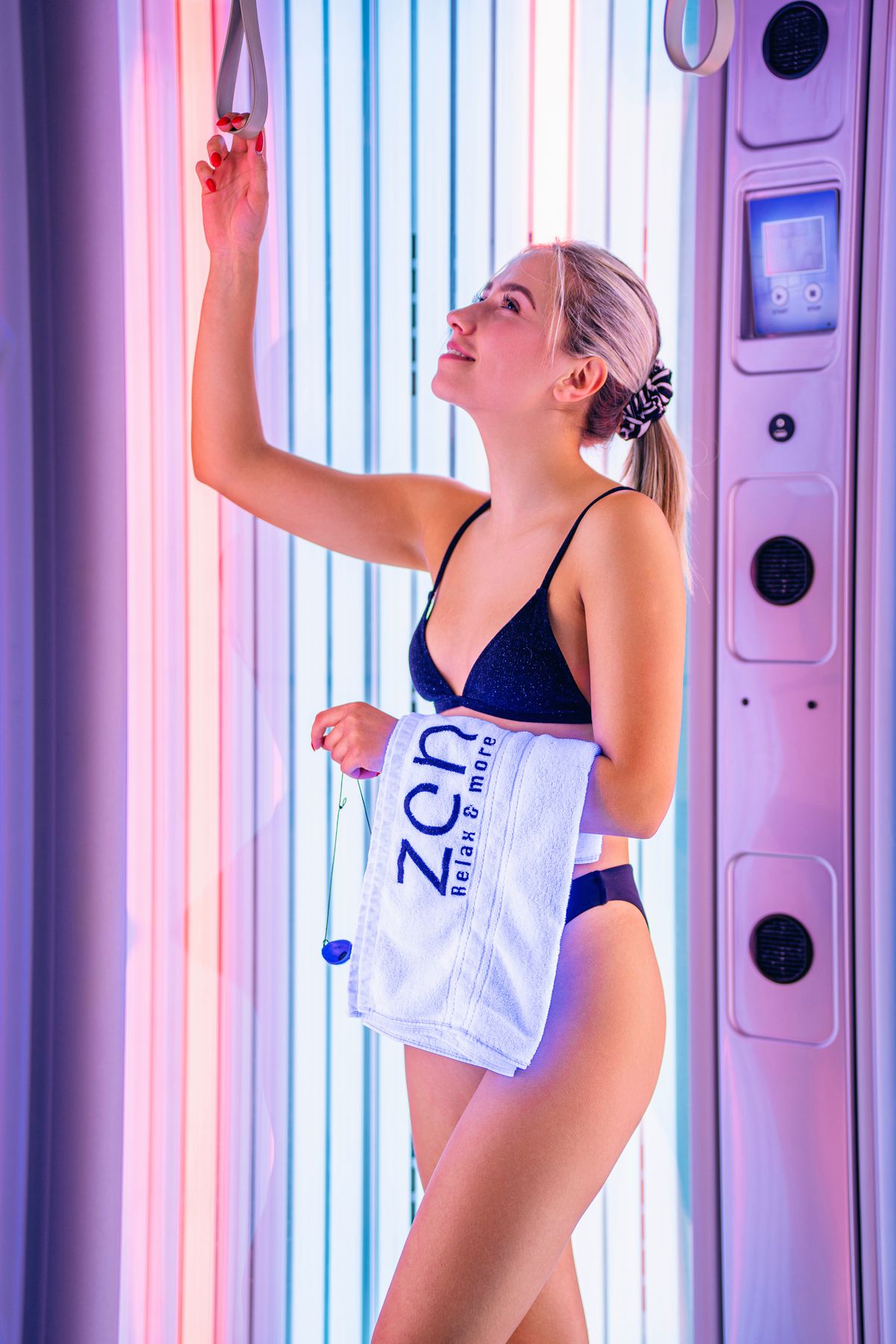
Important Safety Notes: UV Risk and Skin Damage
This is the most important section of this guide, and it should not be skipped. Tanning accelerators do not protect skin from ultraviolet radiation, and using one does not make sunbathing or sunbed use safe. Ultraviolet light damages skin cells, and that damage accumulates over time. It can cause sunburn in the short term, and it is linked to premature skin ageing, including fine lines, uneven pigmentation and loss of elasticity, as well as to an increased risk of skin cancer over the longer term. A tan itself is a visible sign that skin has responded to ultraviolet damage, not a sign that skin has become protected or healthier. That point is often lost in tanning marketing, but it is central to making an informed choice.
Overexposure is a particular risk with accelerator products, precisely because they are marketed around speed and intensity. The temptation to stay out longer, to use a sunbed more often, or to skip sunscreen because a product feels like it is doing the work, is exactly the pattern that leads to burning and lasting damage. An accelerator should never be used as a reason to extend exposure, to tan through burning, or to ignore the usual precautions for time in the sun. If skin becomes red, sore, tight or blistered, that is sunburn, and it means exposure should stop and skin should be allowed to recover, not that a stronger product is needed.
Some people face higher risks than others and should be especially cautious. Very fair skin that burns easily, skin with many moles or a personal or family history of skin cancer, skin that is already damaged or irritated, and skin affected by certain medications or medical conditions can all react more strongly to ultraviolet light. Children and teenagers should not use sunbeds, and anyone who is unsure about their risk should seek advice from a healthcare professional or dermatologist before considering any form of ultraviolet tanning. Eye protection is also essential during sunbed use, and eyes should never be left unprotected in the belief that closed eyelids alone are enough.
- Never use an accelerator as a substitute for sun protection: If you are in the sun, use appropriate sunscreen and protective measures, and do not rely on a tanning product for protection.
- Never tan through burning: Redness, soreness or peeling means skin has been damaged, so stop exposure and let skin recover.
- Never extend exposure to chase a deeper colour: Longer sessions increase damage without guaranteeing a better or longer-lasting result.
- Patch test first: Try a new product on a small area of skin and stop use if it causes irritation, redness or discomfort.
- Avoid unregulated tanning pills and injections: These carry serious health risks and are not a safe alternative to lotions.
- Check your skin regularly: Watch for new or changing moles and seek medical advice promptly about anything unusual.

How People Typically Use Tanning Accelerators
For those who choose to use a tanning accelerator, the usual routine is simple, and following the product label is more important than following general advice online. Most lotions and creams are applied evenly to clean, dry skin shortly before ultraviolet exposure, with care taken to cover all exposed areas and to avoid the eyes and broken skin. Hands should be washed after application, unless the hands themselves are being tanned, because uneven application on the hands is a common cause of patchy colour. Reapplication directions vary by product, so the label, rather than habit, should guide how often a product is used.
Moisturising after exposure is just as important as preparation before it. Skin that has been exposed to ultraviolet light can become dry, and a gentle, fragrance-free moisturiser can help skin feel comfortable and look more even as colour develops or fades. Harsh scrubs, very hot showers and heavily fragranced products immediately after tanning can irritate skin that is already stressed, so a gentle routine is the better choice. Drinking water and looking after skin from the inside, through general skincare and a balanced routine, also supports skin health, though it does not offset ultraviolet damage or replace sun protection.
It is worth repeating that the safest routine is one that keeps exposure moderate and infrequent, rather than one that tries to maximise it. If you are using an accelerator, ask yourself whether you would be comfortable with the same amount of exposure without it. If the answer is no, the product is encouraging you to take a risk you would not otherwise take, and that is a good reason to reconsider. Beauty routines should support skin health, not work against it, and a tan that comes at the cost of burning, peeling or lasting damage is not a beauty result worth pursuing.
Choosing a Tanning Accelerator
Choosing a product starts with being honest about your goal. If you want a bronzed look for an event, a self-tan product may give you that look more predictably and without ultraviolet exposure. If you already spend time in the sun and want skin to look more even, a moisturising accelerator may suit you, provided you continue to use proper sun protection and keep exposure sensible. If your main goal is the deepest possible tan in the shortest possible time, no product can deliver that safely, and it is worth reconsidering the goal itself rather than searching for a stronger formula.
When comparing products, prioritise transparency over dramatic claims. A clear ingredients list, honest directions, realistic language about results, and warnings about sensitivity and sun protection are all good signs. Vague promises, missing ingredients information, or claims that a product protects skin while tanning should raise questions. Fragrance, texture and finish are matters of personal preference, but they should not be the main reason for choosing a product that will be used alongside ultraviolet exposure. Skin compatibility and clear safety information matter far more than packaging or scent.
Finally, think about the full beauty routine rather than a single product in isolation. Healthy, well-moisturised skin, a neat manicure, and a considered approach to sun protection together give a more polished result than any one tanning product alone. A tan should be one part of a routine that cares for skin, not a goal that overrides everything else. Used with that mindset, and with the safety notes in this guide kept firmly in mind, a tanning accelerator can be understood for what it is: a cosmetic product that may help colour look more even, not a shortcut to safe tanning, and not a substitute for protecting your skin.
Frequently Asked Questions
Do tanning accelerators work without sun or sunbeds? No. Tanning accelerators are designed to be used alongside ultraviolet exposure, so they do not create a tan on their own. If you want colour without ultraviolet exposure, a self-tan product is the appropriate choice.
Do tanning accelerators protect skin from UV damage? No. A tanning accelerator is not a sunscreen, and it should never be treated as protection. Appropriate sunscreen and sensible exposure limits remain essential whenever you are in the sun.
Can a tanning accelerator stop skin from burning? No. Skin that burns easily will still burn, and an accelerator does not change that. Burning is a sign of skin damage, and exposure should stop if skin becomes red or sore.
Are tanning accelerators suitable for sensitive skin? It depends on the formula and on your skin. Patch testing first, checking the ingredients list, and stopping use if irritation occurs are sensible precautions, and anyone with a skin condition or concerns should seek professional advice before use.