Achieving a healthy, glowing complexion is rarely about finding a single miracle product. Real, lasting results come from understanding what happens beneath the surface and pairing proven daily habits with the right active ingredients. Whether you want to know how to have beautiful clear skin naturally or build a targeted regimen from scratch, this comprehensive guide will help you achieve clear skin without compromising your moisture barrier.
Understanding Your Skin: Why Breakouts and Texture Happen
Before applying new products, it is essential to understand why acne, redness, and uneven skin texture occur in the first place.
The Biology of Clogged Pores: Sebum, Dead Cells, and P. Acnes
Every pore on your face is an opening to a hair follicle containing sebaceous glands. These glands produce sebum, a natural oil that lubricates the skin and protects your hydrolipidic film.
Acne begins when excess sebum combines with dead skin cells and environmental debris. This sticky mixture forms a plug inside the pore, creating an oxygen-deprived environment where Cutibacterium acnes (formerly known as P. acnes bacteria) thrives. As the bacteria multiply, they trigger an inflammatory response, leading to visible redness, swelling, and blemishes.
Hormonal vs. Bacterial vs. Fungal Acne
Not all blemishes originate from the same source:
-
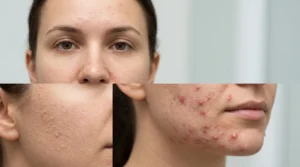
Bacterial Acne: Typically presents as whiteheads, blackheads, and inflamed pustules across the T-zone, cheeks, and forehead.
-
Hormonal Acne: Often appears along the jawline, chin, and lower cheeks as deep, painful cysts that flare up in sync with menstrual cycles or stress-induced cortisol spikes.
-
Fungal Acne (Malassezia Folliculitis): Appears as clusters of uniform, itchy, small bumps, commonly on the forehead, chest, and shoulders. Standard acne ingredients like benzoyl peroxide often fail to clear it, requiring topical antifungal ingredients instead.
Identifying Your Skin Type
Knowing your baseline skin type is critical for choosing the right formulas to maintain clear skin:
-
Oily Skin: Experiences persistent shine, enlarged pores, and frequent clogged comedones across the face.
-
Dry Skin: Feels tight, appears flaky, and has a weakened moisture barrier that needs rich lipid replenishment.
-
Combination Skin: Features an oily T-zone (forehead, nose, chin) paired with dry or normal cheeks.
-
Sensitive Skin: Reacts quickly with stinging, flushing, or irritation when exposed to strong actives or synthetic fragrances.
The Core 4-Step Daily Routine for Clear Skin
A simple, consistent routine outperforms a complicated ten-step process every time. Here is the foundational framework recommended by skincare professionals.
Step 1: Double Cleansing Without Stripping Your Moisture Barrier
Cleansing properly clears away pore-clogging impurities without stripping away essential lipids.
-
Evening Step 1 (Oil Cleanser or Micellar Water): Dissolves waterproof sunscreen, makeup, and surface sebum.
-
Evening Step 2 (Gentle Water-Based Cleanser): Removes lingering residue, sweat, and dirt.
Avoid harsh sulfate cleansers that leave your face feeling tight or squeaky. A gentle, pH-balanced cleanser keeps your natural barrier intact.

Step 2: Targeted Active Treatments (Salicylic Acid, Benzoyl Peroxide, Retinoids)
Apply active treatments to clean, dry skin. Choose your active based on your primary concern:
-
Use salicylic acid for clear skin if your main struggles are blackheads and enlarged pores.
-
Use a targeted benzoyl peroxide spot treatment to reduce inflammatory bacterial pimples.
-
Apply a pea-sized amount of retinol for clogged pores at night to speed up cellular turnover.
Step 3: Hydration & Barrier Repair with Non-Comedogenic Moisturizers
Every skin type, including acne-prone and oily skin, requires moisture. Skipping hydration prompts your sebaceous glands to overproduce oil to compensate for water loss. Choose a lightweight, non-comedogenic moisturiser packed with ceramides, hyaluronic acid, and glycerin to reinforce your moisture barrier.
Step 4: Daily Broad-Spectrum Sunscreen Protection (SPF 30+)
Sun exposure darkens post-inflammatory marks and degrades skin elasticity. Apply a broad-spectrum SPF for clear skin every morning as your final step. Mineral sunscreens with zinc oxide or lightweight, fluid chemical sunscreens protect fresh blemishes from turning into stubborn brown spots.
Active Ingredients Decoded: What Works for Your Specific Concern
Using the right ingredients together accelerates your path toward clear skin while preventing unnecessary redness and flaking.
Blackheads & Enlarged Pores: Salicylic Acid (BHA) & Niacinamide
Salicylic acid is oil-soluble, meaning it penetrates deep into lipid-filled pores to dissolve trapped dead cells and sebum. Pairing it with a niacinamide serum for breakouts helps regulate excess oil production, calm surface redness, and support smooth texture.
Inflammatory Pimples & Cysts: Benzoyl Peroxide & Azelaic Acid
Benzoyl peroxide introduces oxygen into the pores, neutralizing acne-causing bacteria on contact. For sensitive skin that tolerates benzoyl peroxide poorly, azelaic acid for redness and swelling serves as an effective, soothing alternative that also refines texture.
Post-Acne Marks: Vitamin C & Alpha Arbutin for PIE vs. PIH
Post-blemish discoloration comes in two distinct forms:
-
Post-Inflammatory Erythema (PIE): Pink or red marks caused by damaged capillaries near the skin surface. Look for calming ingredients like centella asiatica, azelaic acid, and niacinamide.
-
Post-Inflammatory Hyperpigmentation (PIH): Brown or dark spots caused by an overproduction of melanin. Use vitamin C, alpha arbutin, and chemical exfoliant for clear skin (such as glycolic or lactic acid) to fade discoloration.
The Do’s and Don’ts of Layering Skincare Actives
| Active Ingredient | Ideal Partners | Ingredients to Avoid Combining at the Same Time |
| Retinol / Retinoids | Niacinamide, Hyaluronic Acid, Ceramides | AHAs (Glycolic/Lactic Acid), BHAs (Salicylic Acid), Benzoyl Peroxide |
| Salicylic Acid (BHA) | Niacinamide, Centella Asiatica, Squalane | Strong Retinoids, Pure L-Ascorbic Acid (Vitamin C) |
| Benzoyl Peroxide | Hyaluronic Acid, Gentle Hydrators | Retinol (unless micro-encapsulated), Direct Vitamin C |
| Vitamin C (L-Ascorbic Acid) | Vitamin E, Ferulic Acid, Sunscreen | Retinol, High-Strength AHA/BHA chemical peels |
Beyond the Face: Treating Chest, Back, and Body Breakouts
Breakouts frequently extend beyond the face, affecting the neck, shoulders, chest, and back.
Why Body Acne Occurs and How to Clear Bacne Fast
Body acne is often caused by a combination of trapped sweat, friction from tight clothing, and heavy body lotions. To clear body breakouts quickly, shower promptly after exercising and swap heavy laundry detergents for fragrance-free alternatives.
Body Washes with AHA/BHA vs. Benzoyl Peroxide
-
Salicylic Acid (BHA) Body Washes: Best for bumpy texture, closed comedones, and mild clogged pores.
-
Benzoyl Peroxide Body Washes (4% to 10%): Best for stubborn inflammatory back and chest blemishes. Leave the lather on your skin for two minutes before rinsing to give the antibacterial agent time to work.
Troubleshooting Your Journey to Clear Skin
Understanding the normal stages of skin renewal keeps you consistent, helping you achieve clear skin without unnecessary frustration.
Skin Purging vs. Allergic Breakouts: How to Tell the Difference
When introducing cell-turnover actives like retinoids, AHAs, or BHAs, your skin may go through a temporary purge phase.
-
Skin Purging: Occurs in areas where you regularly break out, features small whiteheads that resolve faster than usual, and subsides within 4 to 6 weeks.
-
Allergic Reaction / Contact Dermatitis: Appears in new areas where you rarely get blemishes, presents as itchy red patches or burning bumps, and requires immediate discontinuation of the product.
Realistic Timeline Expectations: How Long Does Skin Cycling Actually Take?
A normal epidermal cell turnover cycle takes roughly 28 to 40 days. While an overnight acne spot corrector can calm a single inflamed bump in a few days, full-face texture smoothing and post-inflammatory fading take between 6 and 12 weeks of steady, consistent care.
5 Common Habits That Sabotage Clear Skin
-
Infrequent Pillowcase Changes: Pillowcases accumulate facial oils, hair styling products, and bacteria. Wash or rotate them every 3 to 4 days.
-
Touching and Picking: Picking introduces bacteria from fingers into the skin, turning minor bumps into deep, scarred lesions.
-
Dirty Smartphone Screens: Clean your phone screen regularly with an alcohol wipe to prevent bacteria transfer to your cheeks and jawline.
-
Over-Exfoliating: Scrubbing excessively strips the skin, triggering rebound oil production and redness.
-
Overlooking Dietary Triggers: High-glycemic foods and dairy can trigger insulin spikes that stimulate sebaceous glands. Adding foods that are good for facial skin, such as omega-3 rich salmon, chia seeds, leafy greens, and antioxidant-rich berries, supports your skin from within.
When to Seek Professional Dermatological & Laser Treatments
When over-the-counter products are not enough, advanced clinical solutions can deliver significant improvements.
In-Office Laser Innovations (AviClear, Forever Clear BBL)
Emerging laser technology for skincare provides a non-invasive way to tackle persistent acne at the root.
-
AviClear Laser: An FDA-approved laser to treat acne that selectively targets and suppresses sebocytes within sebaceous glands. By downregulating sebum production, it helps permanently reduce acne breakouts across all skin tones.
-
Forever Clear BBL: Uses BroadBand Light to kill P. acnes bacteria with blue light, reduce inflammation with yellow light, and stimulate collagen repair with infrared light.
Prescription Topicals & Oral Medications (Tretinoin, Spironolactone, Accutane)
A board-certified dermatologist can prescribe high-strength medical solutions for chronic conditions:
-
Topical Retinoids (Tretinoin, Tazarotene, Trifarotene): Medical-grade treatments that normalize skin cell shedding. If you are considering prescription-strength retinoids, reviewing a comprehensive tretinoin transformation guide can help you set realistic expectations for the adjustment period and long-term results.
-
Oral Spironolactone: Blocks androgen hormones from overstimulating oil glands in adult female hormonal acne.
-
Isotretinoin (Accutane): A powerful systemic retinoid that dramatically reduces sebaceous gland activity for severe, cystic acne.
Consulting a medical expert provides a clear diagnosis and a targeted roadmap to safely attain clear skin.
FAQs
How can I get clear skin in one week?
While resolving chronic acne takes multiple cellular turnover cycles, you can improve surface clarity in seven days by simplifying your routine. Focus on double cleansing at night, applying a gentle chemical exfoliant, using a non-comedogenic moisturiser, and avoiding face-picking.
Can drinking more water clear up acne?
Hydration supports kidney function, overall toxin clearance, and cellular moisture balance. However, water intake alone will not cure bacterial or hormonal breakouts. It works best as a supportive lifestyle habit alongside active topical treatments.
Why is my skin suddenly breaking out?
Sudden breakouts are usually triggered by internal or external shifts. Common culprits include hormonal fluctuations, chronic stress, comedogenic hair or cosmetic products, over-exfoliation that has damaged your barrier, or changes in humidity and diet.
Following this structured routine gives your skin the balance, protection, and active care it needs to build a healthy barrier and maintain clear skin for the long term.